 Image 1 of 4
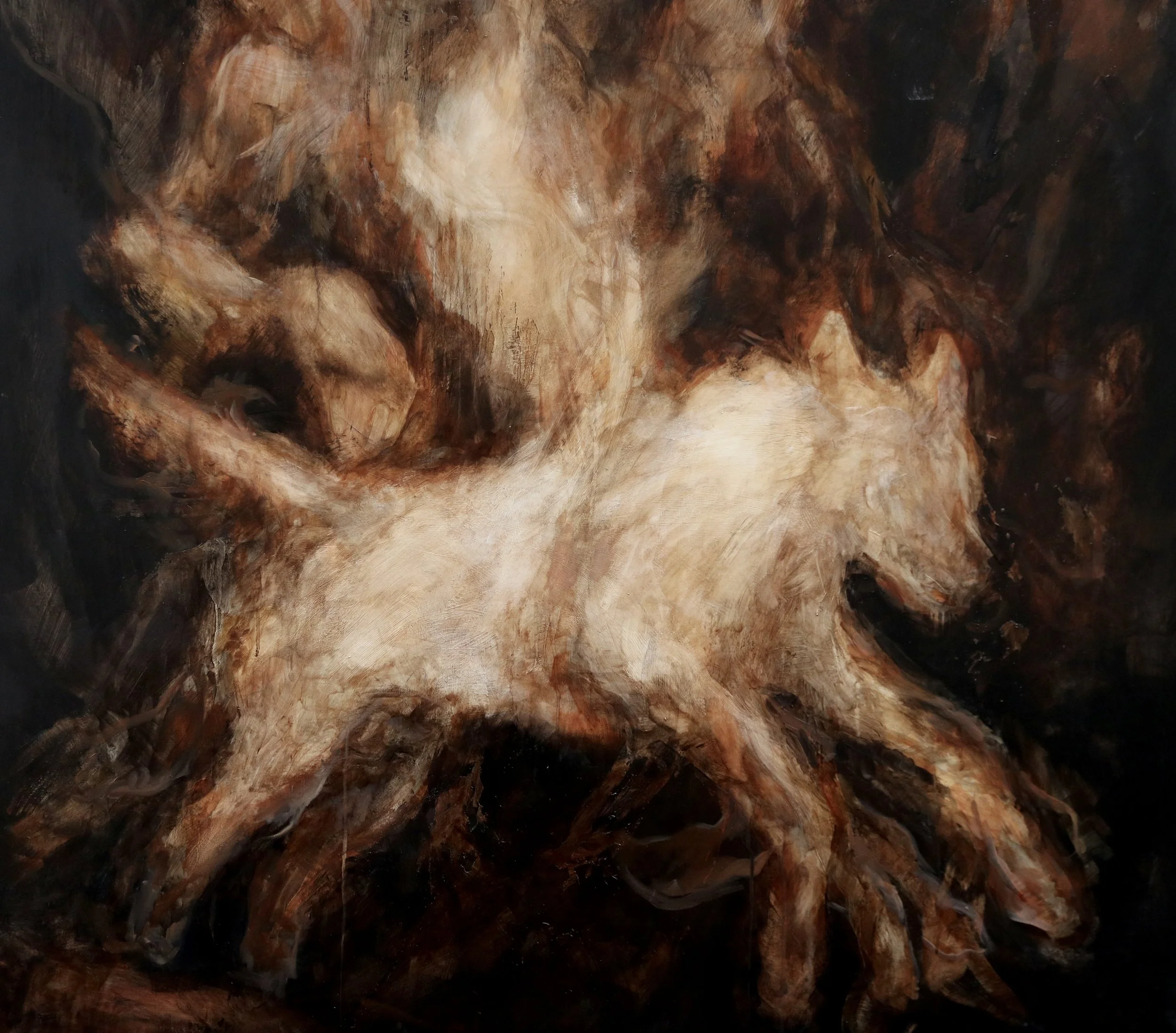 Image 2 of 4
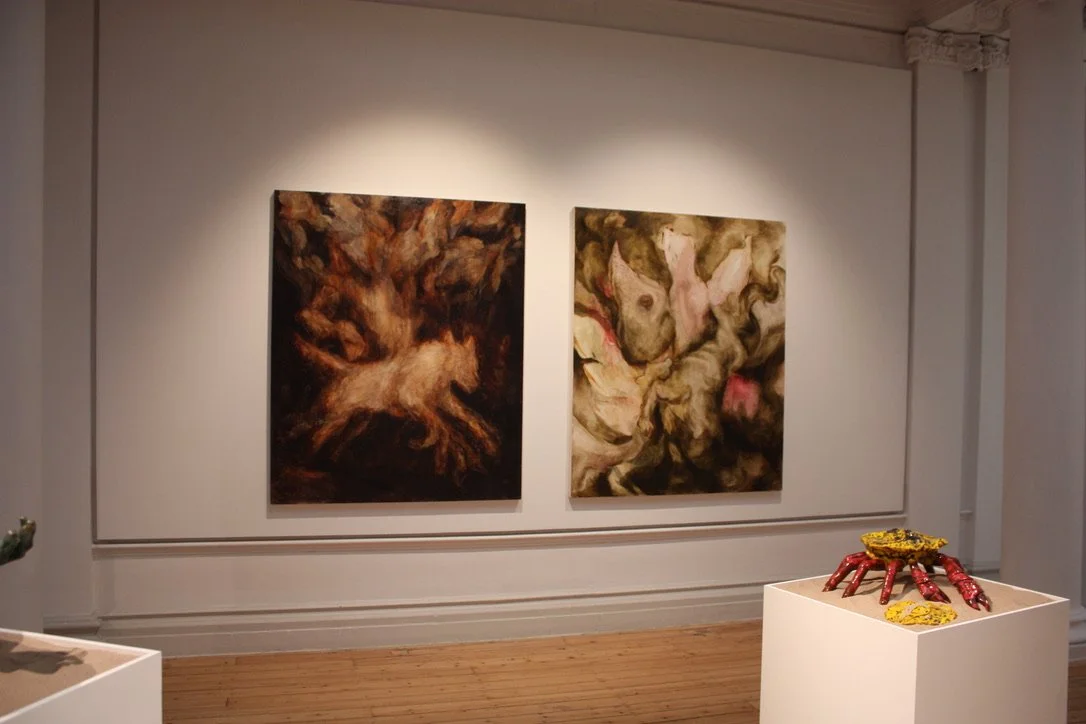 Image 3 of 4
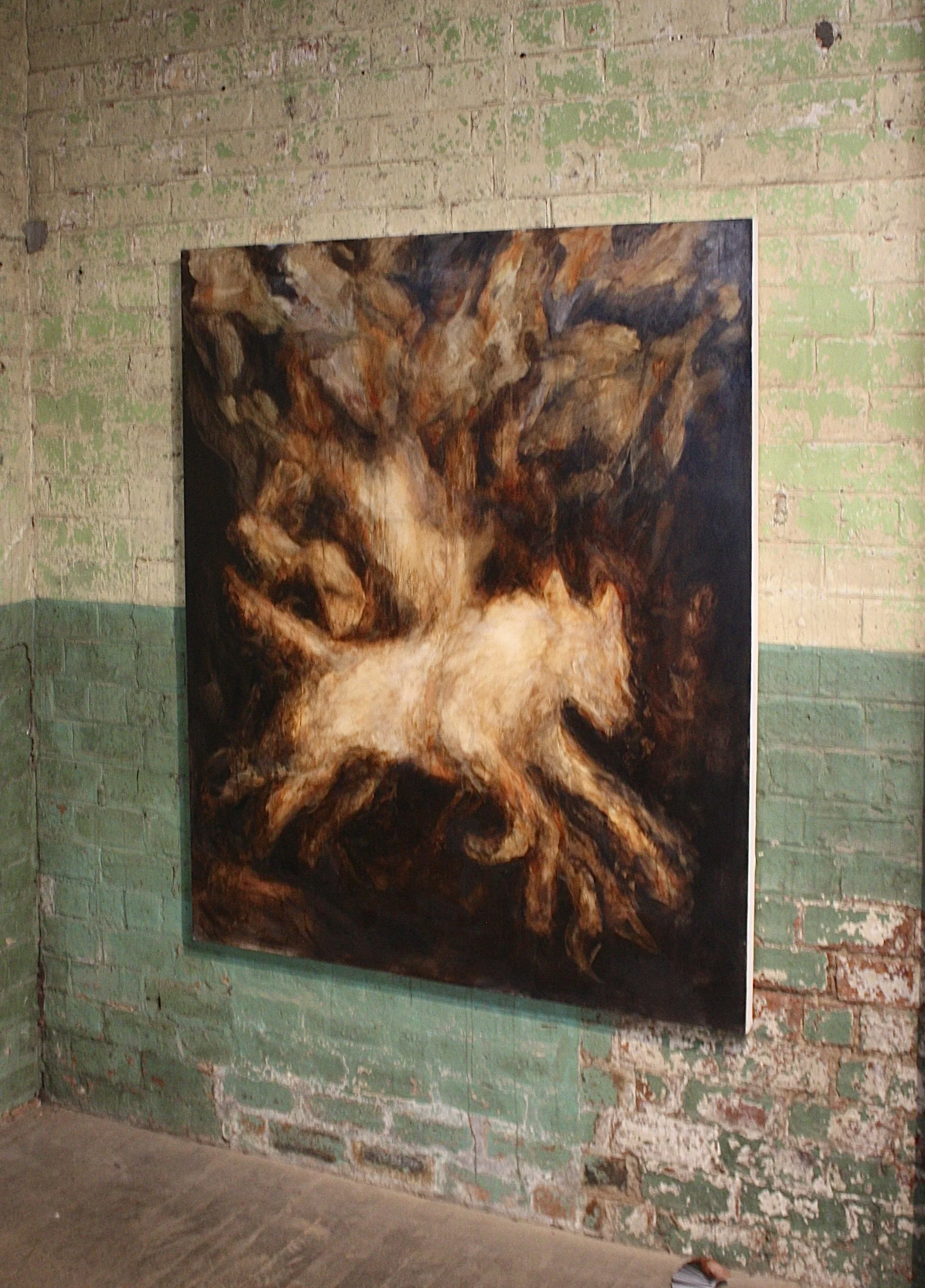 Image 4 of 4
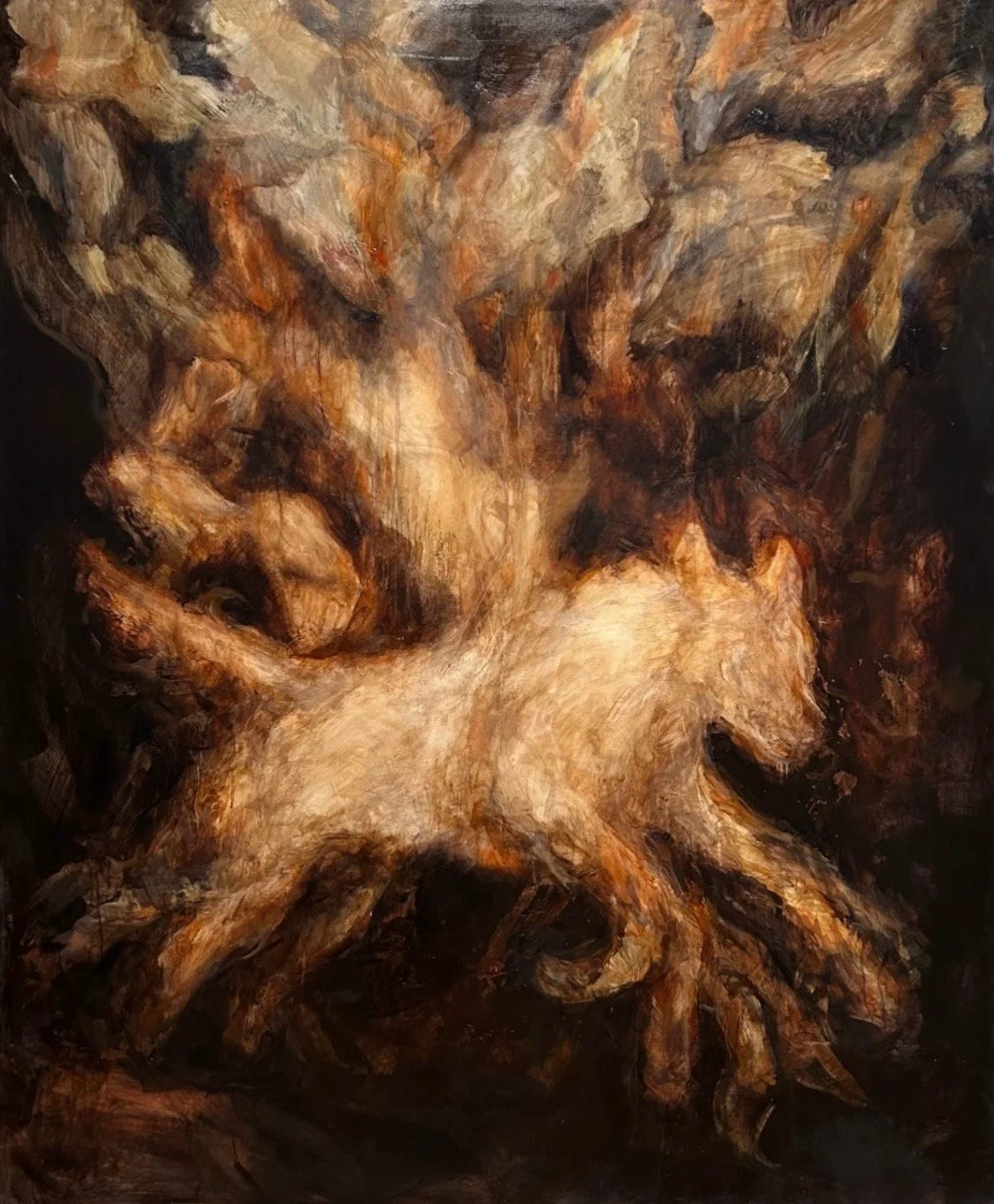
Oil on canvas
140 × 170cm
This painting is based on the tale of the "Wolf and the Blade", its a fable about how eskimos used to catch wolves and is a metaphor about self-destructive desire and being consumed by one's own vices.
In the story, a hunter prepares a trap by concealing a sharp blade within layers of frozen blood. Attracted by the scent, a wolf finds the trap and begins to lick the frozen layers. Driven by its hunger, the wolf becomes so consumed by the immediate reward that it fails to notice when the protective layers of ice have vanished. Eventually, the wolf's own actions lead to its demise. Because the wolf is so focused solely on its insatiable craving and potential reward, it does not realise it is starting to lick its own blood from the blade until the wolf continues until it eventually collapses from its injuries.
Oil on canvas
140 × 170cm
This painting is based on the tale of the "Wolf and the Blade", its a fable about how eskimos used to catch wolves and is a metaphor about self-destructive desire and being consumed by one's own vices.
In the story, a hunter prepares a trap by concealing a sharp blade within layers of frozen blood. Attracted by the scent, a wolf finds the trap and begins to lick the frozen layers. Driven by its hunger, the wolf becomes so consumed by the immediate reward that it fails to notice when the protective layers of ice have vanished. Eventually, the wolf's own actions lead to its demise. Because the wolf is so focused solely on its insatiable craving and potential reward, it does not realise it is starting to lick its own blood from the blade until the wolf continues until it eventually collapses from its injuries.